
Conventional Reverse Transcription Polymerase Chain Reaction (RT-PCR) is a foundational molecular biology technique used to analyze RNA expression, transcript presence, and RNA-derived genetic material. By combining reverse transcription with endpoint PCR amplification, conventional RT-PCR enables laboratories to convert RNA into complementary DNA (cDNA) and subsequently detect specific sequences using standard PCR workflows.
Despite the emergence of real-time RT-PCR and sequencing-based transcriptomics, conventional RT-PCR remains indispensable in research, biotechnology, education, and method development laboratories due to its simplicity, flexibility, and robustness.
This article provides an in-depth, laboratory-oriented overview of conventional RT-PCR, focusing on reverse transcriptase enzymes, workflow design, optimization strategies, and practical applications, before introducing how a Conventional RT-PCR Kit / Reverse Transcriptase integrates into routine molecular biology workflows.
RNA analysis as a cornerstone of molecular biology
RNA serves as the functional intermediary between genotype and phenotype, reflecting gene expression, regulation, and cellular response. Studying RNA allows researchers to:
-
detect gene transcription
-
analyze alternative splicing
-
monitor expression changes
-
study RNA viruses and transcripts
Educational overviews from NIH and Genome.gov explain the central role of RNA in molecular biology:
https://www.ncbi.nlm.nih.gov/books/NBK26850/
https://www.genome.gov/genetics-glossary/RNA
Because PCR enzymes amplify DNA—not RNA—reverse transcription is required to convert RNA into a DNA template suitable for amplification.
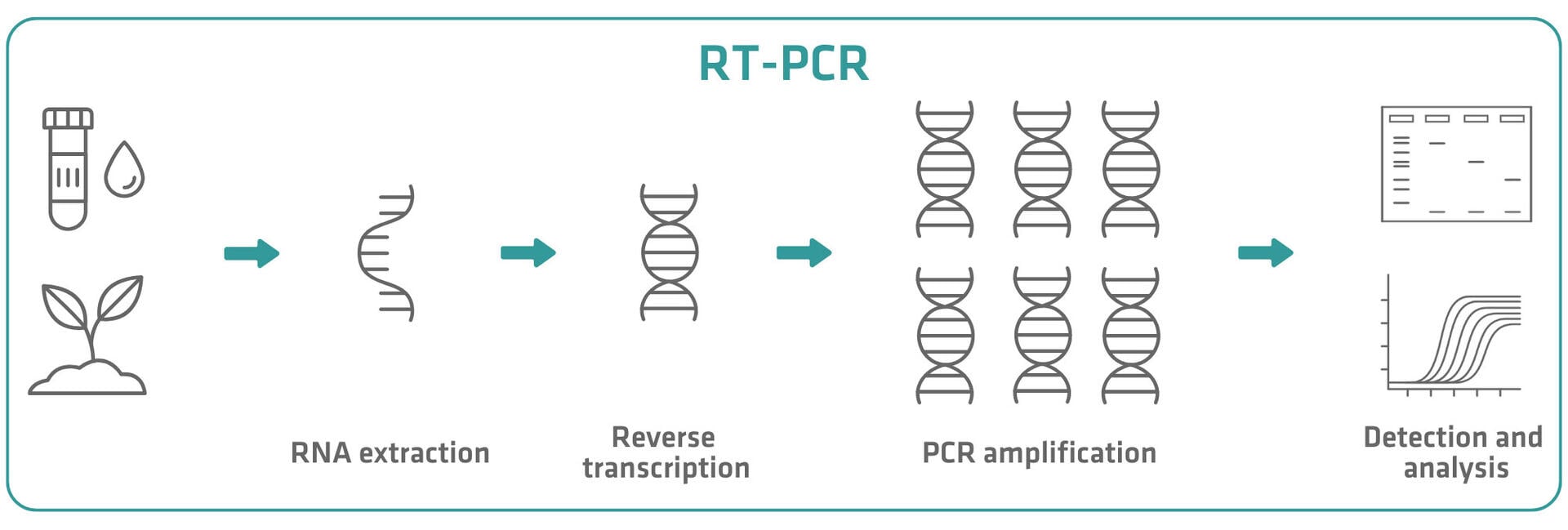
What is conventional RT-PCR?
Conventional RT-PCR is a two-step molecular technique consisting of:
-
Reverse transcription (RT) – synthesis of cDNA from RNA
-
Conventional PCR – amplification of the cDNA using sequence-specific primers
The final PCR product is detected at the endpoint, most commonly by agarose gel electrophoresis.
NIH-hosted molecular biology resources describe RT-PCR principles and workflows in detail:
https://www.ncbi.nlm.nih.gov/books/NBK55396/
https://www.ncbi.nlm.nih.gov/pmc/articles/PMC7141722/
Reverse transcriptase: the key enzymatic component
Origin and function of reverse transcriptase
Reverse transcriptase (RT) enzymes were originally identified in retroviruses, where they catalyze the synthesis of DNA from an RNA template. In molecular biology laboratories, engineered and purified reverse transcriptases are used to generate cDNA for downstream applications.
Educational explanations of reverse transcriptase function are available from NIH and NCBI:
https://www.ncbi.nlm.nih.gov/books/NBK26852/
https://www.ncbi.nlm.nih.gov/pmc/articles/PMC3058489/
Common properties of laboratory reverse transcriptases
Laboratory-grade reverse transcriptases are typically characterized by:
-
RNA-dependent DNA polymerase activity
-
reduced RNase H activity (to preserve RNA template)
-
compatibility with a range of primers
-
activity across moderate temperature ranges
These properties influence cDNA yield, length, and representation.

RT-PCR workflow: step-by-step laboratory process
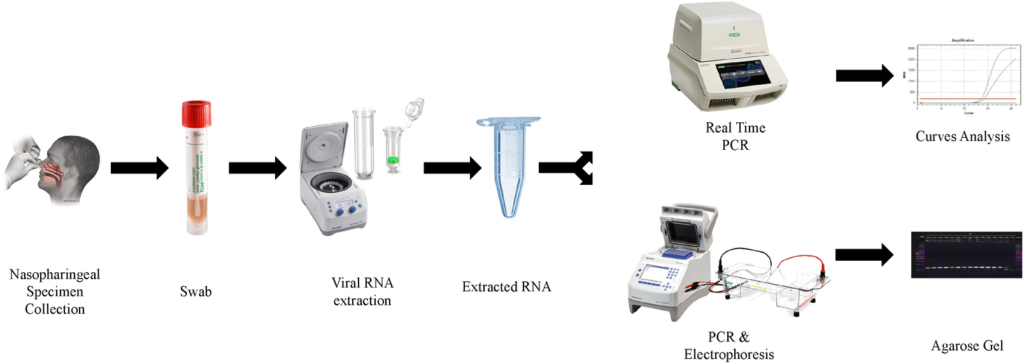
Step 1: RNA isolation
High-quality RNA is essential for reliable RT-PCR results. RNA integrity, purity, and absence of inhibitors directly impact reverse transcription efficiency.
NIH and academic protocols for RNA extraction emphasize RNase control and sample handling:
https://www.ncbi.nlm.nih.gov/pmc/articles/PMC5452224/
https://www.ncbi.nlm.nih.gov/books/NBK55416/
Step 2: Reverse transcription (cDNA synthesis)
RNA is converted into cDNA using reverse transcriptase, primers, dNTPs, and buffer. Reaction conditions depend on:
-
RNA template type (total RNA, mRNA, viral RNA)
-
primer strategy
-
enzyme characteristics
University molecular biology manuals describe RT reaction setup and optimization:
https://open.oregonstate.education/microbiology/chapter/rt-pcr/
Step 3: Conventional PCR amplification
The synthesized cDNA is amplified using standard PCR reagents and thermal cycling.
This step follows the same denaturation–annealing–extension logic as conventional PCR.
https://www.ncbi.nlm.nih.gov/pmc/articles/PMC2836090/
Step 4: Endpoint detection
Amplified products are analyzed by agarose gel electrophoresis to confirm:
-
presence or absence of transcripts
-
expected amplicon size
-
reaction specificity
https://www.ncbi.nlm.nih.gov/books/NBK55416/
Primer strategies for reverse transcription
Primer choice during reverse transcription strongly influences which RNA molecules are converted into cDNA.
Common primer types:
-
Oligo(dT) primers – target poly(A)+ mRNA
-
Random primers – generate broad cDNA coverage
-
Gene-specific primers – focus on a single transcript
Educational comparisons of RT priming strategies are provided by NIH-hosted resources:
https://www.ncbi.nlm.nih.gov/pmc/articles/PMC4478221/
Primer selection affects sensitivity, specificity, and transcript representation.
Optimization considerations in conventional RT-PCR
Successful RT-PCR requires optimization at both RT and PCR stages.
Key parameters include:
-
RNA input amount
-
RT incubation temperature and duration
-
primer concentration
-
Mg²⁺ concentration
-
PCR annealing temperature
Academic guides emphasize performing controls to distinguish RT failure from PCR failure:
https://www.ncbi.nlm.nih.gov/books/NBK55396/
Controls and quality assurance in RT-PCR
Standard laboratory controls include:
-
No-RT controls (to detect genomic DNA contamination)
-
No-template controls (NTC)
-
Positive RT controls
CDC molecular biology training materials illustrate control strategies relevant to RT-PCR workflows:
https://www.cdc.gov/labtraining/training-courses/pcr.html
Including appropriate controls is essential for result interpretation and reproducibility.
Applications of conventional RT-PCR in laboratories
Gene expression screening
RT-PCR is commonly used to assess whether a gene is transcriptionally active in a sample.
https://www.ncbi.nlm.nih.gov/pmc/articles/PMC7141722/
RNA virus research (research use)
Conventional RT-PCR enables qualitative detection of RNA viruses in research and environmental studies.
https://www.ncbi.nlm.nih.gov/pmc/articles/PMC5452224/
Splice variant and transcript structure analysis
RT-PCR allows detection of alternative splicing events by amplifying across exon junctions.
https://www.ncbi.nlm.nih.gov/pmc/articles/PMC5868358/
Method development and assay validation
Conventional RT-PCR is often used as a developmental step before implementing quantitative RT-PCR or sequencing assays.
Limitations of conventional RT-PCR
While powerful, conventional RT-PCR has inherent limitations:
-
endpoint (non-quantitative) analysis
-
gel-based detection
-
limited dynamic range
-
sensitivity to RNA degradation
Comparative reviews discuss where conventional RT-PCR fits relative to qRT-PCR and RNA-Seq:
https://www.ncbi.nlm.nih.gov/pmc/articles/PMC7141722/
-
conventional RT-PCR
-
reverse transcriptase enzyme
-
RNA to cDNA synthesis
-
endpoint RT-PCR analysis
-
reverse transcription PCR kit
-
transcript detection laboratory
Practical value of a Conventional RT-PCR Kit / Reverse Transcriptase
A Conventional RT-PCR Kit or Reverse Transcriptase supports laboratories by providing:
-
reliable RNA-to-cDNA conversion
-
compatibility with standard PCR systems
-
flexibility in primer selection
-
suitability for research and method development
Such products are widely used in academic research, biotechnology R&D, training laboratories, and quality control method development, where simplicity and reproducibility are essential.
Authoritative educational references (.edu / .gov)
-
NIH – PCR and RT-PCR fundamentals
https://www.ncbi.nlm.nih.gov/books/NBK26850/ -
Genome.gov – RNA and transcription
https://www.genome.gov/genetics-glossary/RNA -
NCBI – RT-PCR principles and applications
https://www.ncbi.nlm.nih.gov/pmc/articles/PMC7141722/ -
CDC – PCR laboratory practices
https://www.cdc.gov/labtraining/training-courses/pcr.html -
OpenStax – Molecular biology education
https://openstax.org/details/books/microbiology