Next-generation sequencing (NGS) technologies have revolutionized genomic research by enabling comprehensive analysis of DNA sequences across diverse biological systems. One of the essential steps in any sequencing workflow is DNA library preparation, which converts genomic DNA into sequencing-compatible fragments that can be analyzed by sequencing instruments.
A DNA Library Kit (Apply to MGI Platform) is specifically designed to prepare DNA libraries compatible with MGI sequencing systems, enabling efficient and reproducible preparation of sequencing-ready DNA fragments. These kits integrate optimized enzymatic reactions and purification steps to support reliable library construction for genomic research workflows.
Educational resources explaining sequencing technologies and genomic workflows are available through the National Center for Biotechnology Information (https://www.ncbi.nlm.nih.gov), the National Human Genome Research Institute (https://www.genome.gov), and the National Institutes of Health Genomic Data Science Initiative (https://datascience.nih.gov).
Overview of MGI Sequencing Technology
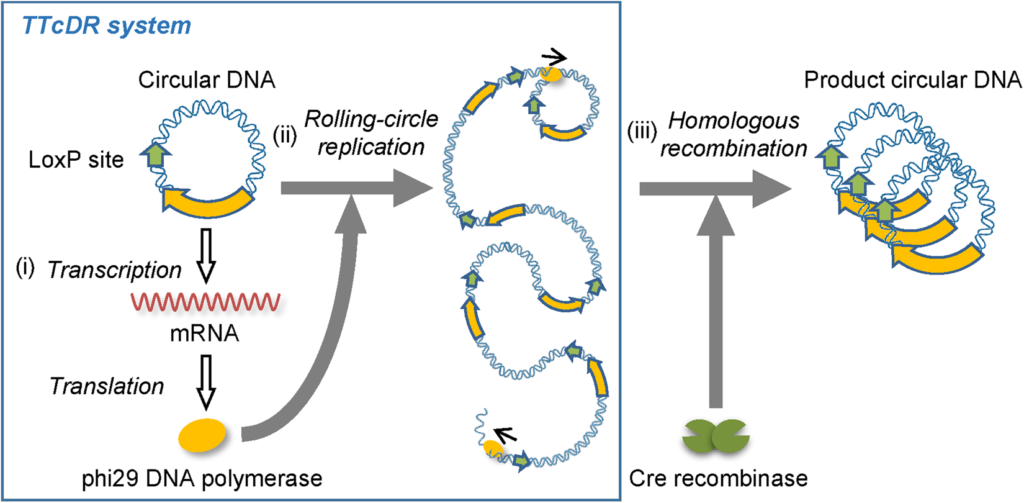
MGI sequencing platforms utilize DNA nanoball (DNB) technology combined with combinatorial probe-anchor synthesis (cPAS) to generate large volumes of sequencing data. In this approach, DNA libraries are converted into circular molecules that are amplified to produce DNA nanoballs, which are then sequenced on patterned arrays.
The DNB-based sequencing strategy allows high-density DNA cluster generation and efficient signal detection during sequencing cycles. Educational explanations of sequencing technologies and genomic analysis can be explored through:
-
National Human Genome Research Institute – DNA Sequencing Fact Sheet
https://www.genome.gov/about-genomics/fact-sheets/DNA-Sequencing-Fact-Sheet -
National Institute of General Medical Sciences – Genomics Overview
https://www.nigms.nih.gov/education/fact-sheets -
National Library of Medicine – Genomic Information Resources
https://www.nlm.nih.gov/research
Research institutions including Harvard Medical School (https://genetics.med.harvard.edu), Stanford University (https://web.stanford.edu), and the Broad Institute of MIT and Harvard (https://www.broadinstitute.org) regularly apply sequencing technologies to investigate genomic structure and genetic variation.
Key Steps in DNA Library Preparation for MGI Sequencing
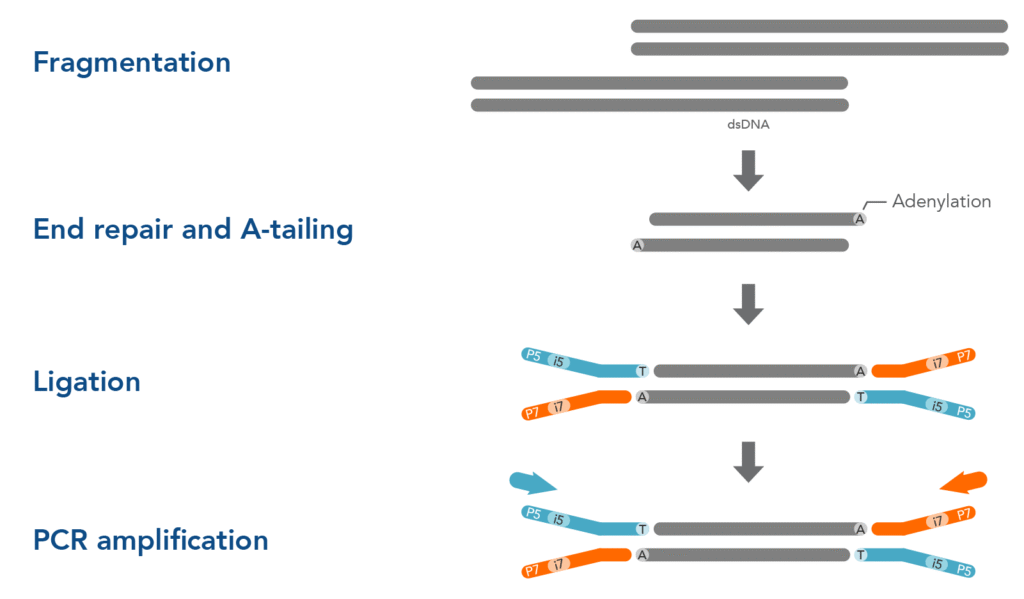
DNA library preparation for MGI sequencing involves several biochemical steps that convert genomic DNA into circularized sequencing templates.
DNA Fragmentation
Genomic DNA is first fragmented into smaller pieces suitable for sequencing analysis. Fragmentation can be achieved through mechanical shearing or enzymatic methods.
Educational explanations of DNA fragmentation strategies are available through:
-
Cold Spring Harbor Laboratory DNA Learning Center
https://dnalc.cshl.edu -
University of California Berkeley Molecular and Cell Biology Department
https://mcb.berkeley.edu
End Repair and Adapter Ligation
Fragmented DNA molecules undergo end repair to create uniform termini suitable for adapter ligation. Platform-specific adapters are then ligated to the DNA fragments.
Information on DNA ligation and polymerase activities is described through resources provided by the National Institutes of Health
https://www.nih.gov and the National Institute of Standards and Technology biotechnology program
https://www.nist.gov.
Circularization of DNA Libraries
A unique step in MGI library preparation is the circularization of DNA fragments, which enables the generation of DNA nanoballs during amplification.
Educational descriptions of circular DNA molecules and genomic library construction can be found through the National Library of Medicine
https://www.nlm.nih.gov.
DNA Nanoball Generation
Circularized DNA templates are amplified through rolling-circle amplification to produce DNA nanoballs (DNBs). These structures are then deposited onto patterned arrays for sequencing.
Research on genomic amplification technologies is frequently conducted at institutions such as the University of Washington Genome Sciences Department
https://www.gs.washington.edu and the University of Cambridge Genomics Research Program
https://www.gen.cam.ac.uk.
Components of a DNA Library Kit for MGI Platform
A DNA Library Kit (Apply to MGI Platform) typically contains several reagents optimized for the construction of sequencing libraries.
DNA Fragmentation Reagents
Reagents that enable controlled fragmentation of genomic DNA to generate fragments suitable for sequencing.
End Repair and A-Tailing Enzymes
These enzymes prepare DNA ends for efficient adapter ligation.
Adapter Ligation Components
Adapters compatible with the MGI sequencing platform are ligated to DNA fragments.
Circularization Reagents
Specialized reagents enable conversion of linear DNA fragments into circular DNA templates.
Library Cleanup Reagents
Purification reagents remove enzymes and excess adapters to ensure high-quality sequencing libraries.
Educational explanations of DNA purification and library construction workflows are available through:
-
University of Wisconsin Biotechnology Center
https://biotech.wisc.edu -
U.S. Department of Energy Joint Genome Institute
https://jgi.doe.gov

Applications of MGI-Compatible DNA Library Kits
DNA library kits designed for MGI sequencing platforms support numerous genomic research applications.
Whole Genome Sequencing
Library preparation enables comprehensive analysis of genomic DNA from a wide range of organisms.
Educational resources describing whole genome sequencing are provided by the National Human Genome Research Institute
https://www.genome.gov/genetics-glossary/Whole-Genome-Sequencing.
Targeted Genomic Sequencing
Researchers can prepare libraries that focus on specific genomic regions or gene panels.
Targeted sequencing strategies are discussed in genomic research programs at Stanford University
https://web.stanford.edu.
Microbial Genome Analysis
Library preparation allows sequencing of microbial genomes to study genetic diversity and microbial evolution.
Microbial genomics initiatives are supported by the U.S. Department of Energy Genome Science Program
https://genomicscience.energy.gov.
Environmental Genomics
Sequencing of environmental DNA samples provides insights into microbial communities and ecological systems.
Environmental genomics research is coordinated by the National Science Foundation Biological Sciences Directorate
https://www.nsf.gov/bio.
Advantages of DNA Library Kits for MGI Platforms
DNA library preparation kits designed for MGI sequencing platforms provide several advantages for genomic laboratories.
Platform-Specific Optimization
Adapters and reagents are designed to ensure compatibility with MGI sequencing chemistry.
Efficient Workflow
Optimized enzymatic reactions simplify the process of constructing sequencing libraries.
High Reproducibility
Standardized reagents support consistent results across experiments.
Scalability
Library preparation workflows can support both small research projects and high-throughput sequencing studies.
Educational discussions of genomic sequencing workflows can be explored through University of California San Diego genomics programs
https://genomics.ucsd.edu.
Best Practices for MGI DNA Library Preparation
To achieve optimal sequencing results when using a DNA Library Kit (Apply to MGI Platform), laboratories typically follow several experimental guidelines.
-
Use high-quality genomic DNA samples
-
Maintain recommended DNA input concentrations
-
Follow optimized fragmentation and ligation protocols
-
Perform careful purification steps to remove contaminants
-
Verify library fragment size distributions before sequencing
Laboratory protocol guidance for genomic sequencing workflows can be found through the National Institutes of Health genomic research resources
https://datascience.nih.gov.
Supporting Modern Genomic Research
DNA library preparation is a critical step in next-generation sequencing workflows. By converting genomic DNA into sequencing-compatible fragments, researchers can investigate genome structure, genetic diversity, and nucleic acid composition across biological systems.
The DNA Library Kit (Apply to MGI Platform) provides a streamlined solution for constructing sequencing libraries compatible with MGI sequencing technologies. Carefully optimized reagents support efficient DNA fragmentation, adapter ligation, circularization, and library purification.
As sequencing technologies continue to evolve, library preparation kits remain essential tools for enabling reliable and reproducible genomic research.
DNA Library Kit MGI Platform
MGI Sequencing Library Preparation Kit
MGI DNA Library Preparation Reagents
NGS Library Kit for MGI Sequencers
DNA Nanoball Library Preparation Kit
MGI-Compatible DNA Library Construction Kit
NGS DNA Library Kit MGI Platform
Genomic Library Preparation Kit MGI
DNA Nanoball Sequencing Library Kit
MGI Next-Generation Sequencing Library Prep Kit