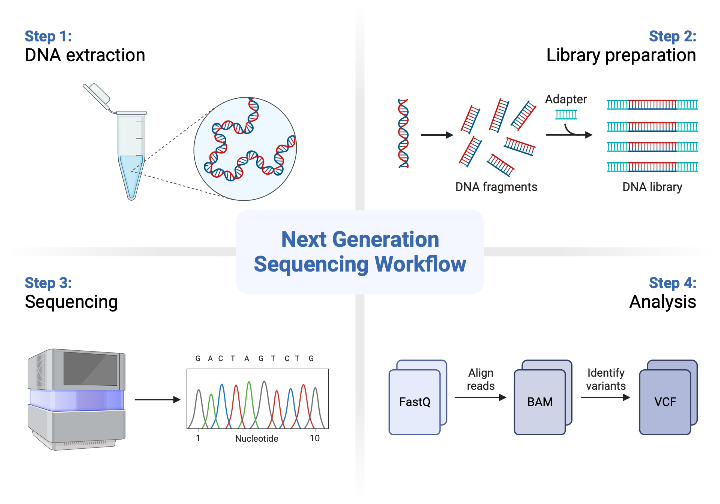
Advances in next-generation sequencing (NGS) technologies have transformed genomic research by enabling rapid and detailed analysis of DNA sequences. One of the key steps in any NGS workflow is DNA library preparation, a process that converts DNA samples into sequencing-ready fragments compatible with a specific sequencing platform. A DNA Library Kit (Apply to Torrent Platform) provides optimized reagents and buffers designed to prepare DNA libraries specifically for Ion Torrent™ semiconductor sequencing systems.
DNA library preparation kits for Torrent platforms streamline multiple steps of the sequencing workflow, including DNA fragmentation, end repair, adapter ligation, and library amplification. These kits support consistent preparation of sequencing libraries suitable for high-throughput genomic research applications.
Educational resources describing next-generation sequencing technologies and genomic analysis can be explored through institutions such as the National Center for Biotechnology Information (https://www.ncbi.nlm.nih.gov), the National Human Genome Research Institute (https://www.genome.gov), and the .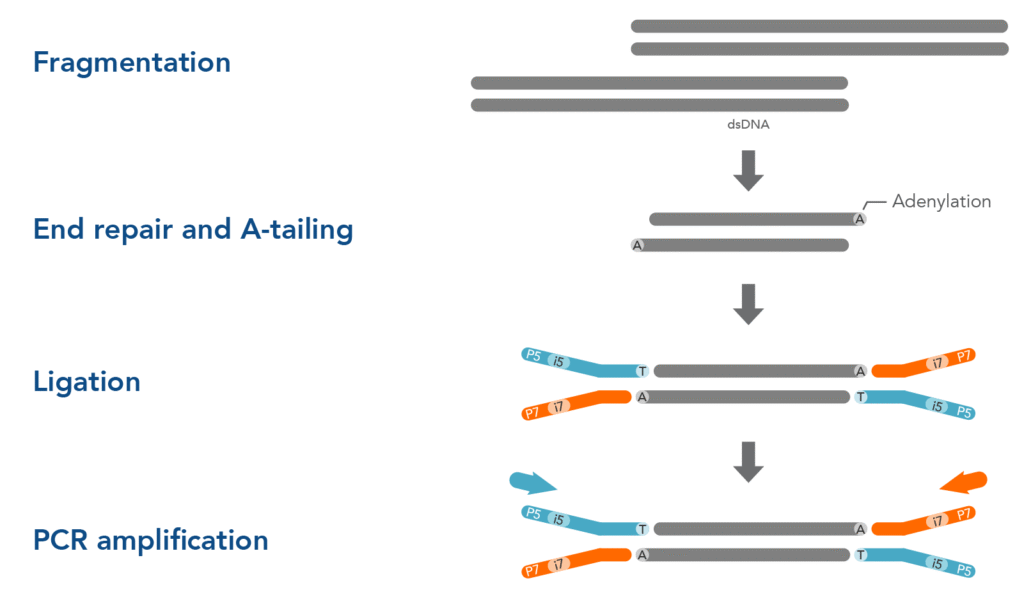
Overview of Ion Torrent Sequencing Technology
The Ion Torrent sequencing platform uses a semiconductor-based detection system that identifies nucleotide incorporation events by measuring changes in pH generated during DNA synthesis. Unlike optical sequencing technologies, Ion Torrent sequencing relies on electronic sensors that detect hydrogen ions released during nucleotide addition.
This detection method allows rapid sequencing runs and flexible read lengths suitable for a variety of genomic workflows.
Educational explanations of semiconductor sequencing technologies are available through:
-
National Human Genome Research Institute – DNA Sequencing Technologies
https://www.genome.gov/about-genomics/fact-sheets/DNA-Sequencing-Fact-Sheet -
National Institute of General Medical Sciences – Genomics Overview
https://www.nigms.nih.gov/education/fact-sheets -
National Center for Biotechnology Information – Sequencing Resources
https://www.ncbi.nlm.nih.gov/guide/genetics
Research institutions including Harvard Medical School (https://genetics.med.harvard.edu), Stanford University (https://web.stanford.edu), and the Broad Institute of MIT and Harvard (https://www.broadinstitute.org) regularly utilize next-generation sequencing technologies for genomic research projects.
Key Steps in DNA Library Preparation for Torrent Sequencing
DNA library preparation converts genomic DNA into a collection of fragments containing platform-specific adapters required for sequencing.
DNA Fragmentation
The first step in library preparation is the fragmentation of genomic DNA into smaller pieces of defined sizes suitable for sequencing.
Fragmentation can be performed using mechanical, enzymatic, or transposase-based approaches. Educational explanations of DNA fragmentation methods can be found through:
-
Cold Spring Harbor Laboratory DNA Learning Center
https://dnalc.cshl.edu -
University of California Berkeley Molecular and Cell Biology Department
https://mcb.berkeley.edu
End Repair and A-Tailing
After fragmentation, DNA ends are repaired to generate blunt ends or single nucleotide overhangs that facilitate adapter ligation.
Information on DNA polymerase and end repair mechanisms is available through the National Library of Medicine
https://www.nlm.nih.gov and the National Institutes of Health Molecular Biology Resources
https://www.nih.gov.
Adapter Ligation
Sequencing adapters are then ligated to both ends of the DNA fragments. These adapters contain sequences necessary for amplification and sequencing on the Torrent platform.
Adapter ligation strategies are discussed in educational resources from:
-
University of Cambridge Genomics Research Program
https://www.gen.cam.ac.uk -
Massachusetts Institute of Technology OpenCourseWare – Molecular Biology
https://ocw.mit.edu
Library Amplification
Following adapter ligation, DNA libraries may undergo amplification using PCR to increase the quantity of sequencing-ready fragments.
PCR principles and amplification techniques are explained through educational resources provided by the National Institute of Standards and Technology Biotechnology Program
https://www.nist.gov and the National Science Foundation Biological Sciences Directorate
https://www.nsf.gov/bio.

Components of a DNA Library Kit for Torrent Platform
A typical DNA Library Kit (Apply to Torrent Platform) includes several reagents that support efficient and reproducible library preparation.
DNA Fragmentation Reagents
These reagents enable controlled fragmentation of genomic DNA to generate sequencing-compatible fragment sizes.
End Repair Enzyme Mix
The end repair reagents prepare fragmented DNA for adapter ligation by correcting DNA termini.
Adapter Ligation Components
Specialized ligation reagents attach platform-compatible adapters to DNA fragments.
Amplification Mix
PCR reagents amplify the adapter-ligated DNA library prior to sequencing.
Library Cleanup Reagents
Purification reagents remove excess adapters, enzymes, and reaction components.
Educational descriptions of DNA purification strategies can be found through:
-
University of Wisconsin Biotechnology Center
https://biotech.wisc.edu -
U.S. Department of Energy Joint Genome Institute
https://jgi.doe.gov
Applications of Torrent-Compatible DNA Library Kits
DNA library preparation kits designed for the Torrent sequencing platform support a wide range of genomic research workflows.
Targeted Sequencing Studies
Library kits enable targeted sequencing of selected genomic regions, allowing researchers to focus sequencing efforts on specific genes or genomic loci.
Targeted sequencing strategies are described by the National Human Genome Research Institute
https://www.genome.gov/genetics-glossary/Targeted-Sequencing.
Microbial Genome Research
Sequencing of microbial genomes helps researchers study genetic diversity within microbial populations.
Microbial genomics programs are supported by initiatives such as the U.S. Department of Energy Genome Science Program
https://genomicscience.energy.gov.
Environmental Genomics
Library preparation methods allow sequencing of DNA extracted from environmental samples including soil, water, and sediments.
Environmental genomics research initiatives are coordinated by the National Science Foundation Biological Sciences Directorate
https://www.nsf.gov/bio.
Transcriptome and Gene Expression Research
Sequencing technologies can also support transcriptome analysis and gene expression research.
Educational resources on transcriptomics are available through:
-
University of California San Diego RNA Center
https://rna.ucsd.edu -
National Institute of Environmental Health Sciences
https://www.niehs.nih.gov.
Advantages of Torrent-Compatible Library Preparation Kits
DNA library kits optimized for Torrent sequencing platforms offer several advantages for genomic research laboratories.
Platform Compatibility
Adapters and reagents are specifically optimized for the Ion Torrent sequencing system.
Efficient Library Construction
Optimized enzymatic reactions help ensure consistent library preparation results.
Flexible Workflow Integration
Library kits support multiple sequencing applications including targeted sequencing and genomic analysis.
High Reproducibility
Standardized reagents and protocols support consistent library quality across experiments.
Best Practices for DNA Library Preparation
To obtain optimal results when using a DNA Library Kit (Apply to Torrent Platform), laboratories typically follow several best practices.
-
Start with high-quality DNA samples
-
Use recommended DNA input concentrations
-
Follow optimized fragmentation and ligation conditions
-
Perform purification steps carefully to remove excess adapters
-
Validate library fragment sizes before sequencing
Educational laboratory protocol guidance can be found through:
-
University of Washington Genome Sciences Department
https://www.gs.washington.edu -
National Institutes of Health genomic research resources
https://datascience.nih.gov.
Supporting Next-Generation Genomic Research
DNA library preparation is a foundational step in next-generation sequencing workflows. By converting genomic DNA into sequencing-compatible libraries, researchers can explore genome structure, genetic variation, and nucleic acid composition across a wide range of biological systems.
The DNA Library Kit (Apply to Torrent Platform) provides a streamlined and optimized solution for preparing sequencing libraries compatible with Ion Torrent semiconductor sequencing systems. Carefully designed reagents support efficient DNA fragmentation, adapter ligation, and library amplification, enabling researchers to generate high-quality sequencing libraries for genomic analysis.
As next-generation sequencing technologies continue to evolve, library preparation kits remain essential tools for enabling reliable and reproducible genomic research workflows.
DNA Library Kit Torrent Platform
Ion Torrent Library Preparation Kit
NGS Library Preparation Kit
DNA Sequencing Library Kit
Torrent-Compatible DNA Library Kit
Next-Generation Sequencing Library Preparation
Ion Torrent DNA Adapter Kit
Genomic DNA Library Preparation Reagents
NGS DNA Library Construction Kit
Torrent Sequencing Library Kit