Epigenomic research has become a central component of modern molecular biology, enabling scientists to investigate how chromatin structure and protein–DNA interactions influence gene regulation. Among the emerging technologies used to explore chromatin dynamics, Cleavage Under Targets and Tagmentation (CUT&Tag) has gained widespread attention as a highly efficient and precise method for mapping chromatin-associated proteins and histone modifications.
A CUT&Tag Assay Kit provides a complete set of optimized reagents required to perform CUT&Tag experiments, allowing researchers to profile chromatin features with high resolution and low background signals. The kit typically includes buffers, enzymatic reagents, and reaction components designed to streamline the workflow for chromatin profiling experiments.
Educational descriptions of chromatin biology and epigenomic regulation are available through resources such as the National Center for Biotechnology Information (https://www.ncbi.nlm.nih.gov), the National Human Genome Research Institute (https://www.genome.gov), and the National Institutes of Health epigenomics program (https://www.nih.gov).
Understanding CUT&Tag Technology
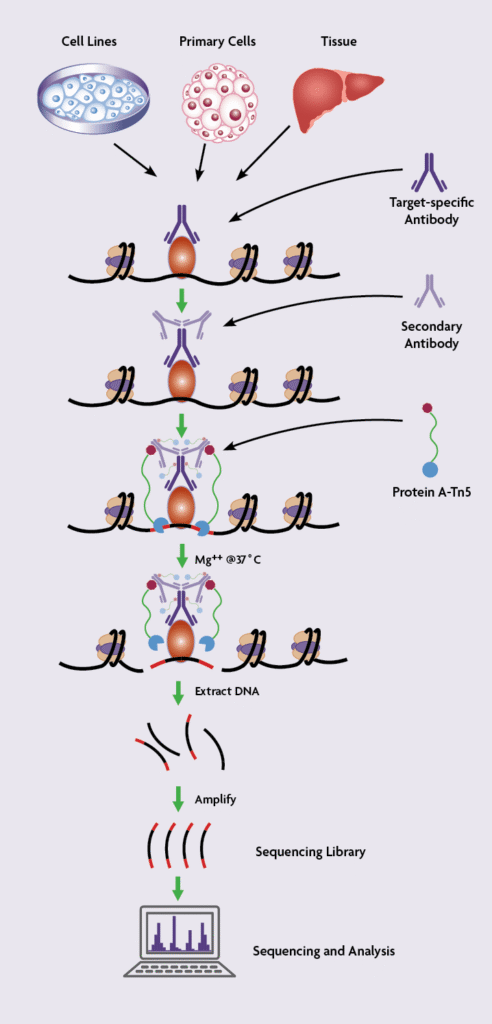
CUT&Tag is a chromatin profiling method that allows researchers to map the location of DNA-binding proteins, histone modifications, and chromatin-associated complexes across the genome. The method uses antibody-targeted tagmentation to selectively cleave and tag DNA regions that are associated with a protein of interest.
In a typical CUT&Tag experiment, an antibody binds to a chromatin-associated protein or histone modification within intact nuclei. A fusion protein containing Protein A or Protein A/G linked to the Tn5 transposase enzyme is then recruited to the antibody-bound region. Once activated, the transposase simultaneously cleaves DNA and inserts sequencing adapters into the nearby genomic regions.
Detailed explanations of chromatin profiling technologies and epigenomic mapping strategies can be found through educational materials provided by the National Institute of General Medical Sciences (https://www.nigms.nih.gov), the ENCODE Project Consortium (https://www.encodeproject.org), and the National Library of Medicine (https://www.nlm.nih.gov).
Components of a CUT&Tag Assay Kit
A typical CUT&Tag assay system includes several reagents that enable efficient chromatin targeting and DNA fragmentation.
Binding and Wash Buffers
Optimized buffers help maintain chromatin integrity during the experimental workflow. These reagents support antibody binding while minimizing background interactions.
Resources describing chromatin isolation techniques are available through the National Institute of Standards and Technology biotechnology program (https://www.nist.gov).
Antibody Targeting System
CUT&Tag experiments rely on highly specific antibodies that recognize the chromatin-associated protein or histone modification being studied. The antibody directs the enzymatic cleavage machinery to specific genomic regions.
Educational discussions of antibody-based chromatin assays can be found through Cold Spring Harbor Laboratory DNA Learning Center (https://dnalc.cshl.edu).
Protein A–Tn5 Fusion Enzyme
The key enzymatic component of CUT&Tag technology is the Protein A–Tn5 transposase fusion enzyme, which binds to the antibody and inserts sequencing adapters directly into nearby DNA regions. This step simultaneously fragments and tags DNA for sequencing.
Descriptions of transposase-based sequencing methods are available through the Broad Institute of MIT and Harvard (https://www.broadinstitute.org).
DNA Purification Reagents
After tagmentation, DNA fragments containing sequencing adapters are purified and prepared for downstream library amplification or sequencing.
Guidance on nucleic acid purification techniques is available through educational resources from the National Institutes of Health genomic research initiatives (https://datascience.nih.gov).

Scientific Principles Behind CUT&Tag
CUT&Tag technology integrates several molecular biology concepts, including antibody specificity, chromatin accessibility, and enzymatic DNA fragmentation.
Chromatin Accessibility
Chromatin structure determines how accessible genomic regions are to regulatory proteins. Epigenomic profiling methods like CUT&Tag allow researchers to examine these accessibility patterns.
Educational explanations of chromatin structure and gene regulation are provided by the National Human Genome Research Institute
https://www.genome.gov/genetics-glossary/Epigenomics.
Antibody-Based Targeting
The antibody used in a CUT&Tag experiment determines which chromatin feature is mapped. Antibodies can target transcription factors, histone modifications, or chromatin-associated complexes.
Protocols and antibody validation resources are available from Harvard Medical School genetics programs
https://genetics.med.harvard.edu.
Transposase-Mediated DNA Tagging
The Tn5 transposase enzyme inserts sequencing adapters into genomic DNA, allowing researchers to identify the exact genomic locations where chromatin-associated proteins bind.
Educational information about transposase biology is available through the University of California Berkeley Molecular Biology Department
https://mcb.berkeley.edu.
Applications of CUT&Tag Assay Kits
CUT&Tag technology is widely used in epigenomics and chromatin research workflows.
Histone Modification Mapping
CUT&Tag can map histone marks such as methylation or acetylation across the genome, providing insights into chromatin organization.
Research programs studying histone biology are conducted at institutions such as Stanford University School of Medicine
https://med.stanford.edu.
Transcription Factor Binding Analysis
The method can identify genomic regions where transcription factors bind DNA, helping researchers study regulatory networks.
Transcription factor research is frequently explored in genomics programs at University of Washington Genome Sciences Department
https://www.gs.washington.edu.
Epigenomic Landscape Profiling
CUT&Tag enables high-resolution mapping of chromatin states, providing insights into gene regulation and chromatin dynamics.
Large-scale epigenomics projects are coordinated by initiatives such as the NIH Roadmap Epigenomics Project
https://www.roadmapepigenomics.org.
Low-Input Chromatin Profiling
CUT&Tag requires significantly fewer cells than many traditional chromatin profiling methods. This makes it particularly useful in experiments involving limited biological material.
Discussions of low-input genomic technologies can be found through Massachusetts Institute of Technology biological engineering programs
https://be.mit.edu.
Advantages of CUT&Tag Technology
Researchers often choose CUT&Tag because it offers several advantages compared to earlier chromatin profiling techniques.
High Signal-to-Noise Ratio
Targeted tagmentation reduces background signals, producing clearer chromatin binding profiles.
Reduced Cell Input Requirements
The method can generate useful chromatin maps from relatively small numbers of cells.
Streamlined Workflow
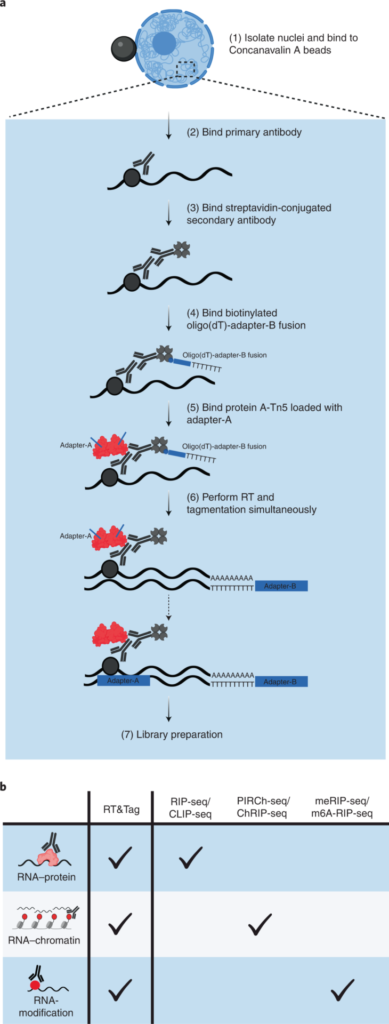
CUT&Tag integrates DNA cleavage and adapter insertion into a single step, simplifying library preparation.
High Genomic Resolution
The technique produces highly precise chromatin binding maps, enabling detailed epigenomic analysis.
Educational overviews of modern chromatin profiling technologies can be explored through University of Cambridge genomics research programs
https://www.gen.cam.ac.uk.
Best Practices for CUT&Tag Experiments
For optimal performance when using a CUT&Tag Assay Kit, laboratories typically follow several recommended experimental practices.
-
Use validated antibodies for chromatin targets
-
Maintain gentle cell handling conditions to preserve chromatin structure
-
Follow recommended incubation temperatures and times
-
Ensure careful washing steps to reduce non-specific interactions
-
Use appropriate sequencing library preparation methods
Laboratory protocol guidance for chromatin profiling experiments can be found through National Institutes of Health molecular biology resources
https://www.nih.gov.
Supporting Advanced Epigenomic Research
CUT&Tag technology continues to expand the capabilities of chromatin research. By providing a sensitive and efficient method for mapping chromatin-associated proteins and histone modifications, CUT&Tag assays help researchers explore gene regulation, chromatin organization, and epigenomic landscapes.
The CUT&Tag Assay Kit offers a streamlined and optimized workflow for performing targeted chromatin profiling experiments. Carefully formulated reagents and buffers support reliable tagmentation reactions and reproducible chromatin mapping results.
As epigenomic research continues to evolve, CUT&Tag methods remain valuable tools for studying chromatin architecture and protein–DNA interactions in diverse biological systems.
CUT&Tag Assay Kit
CUT&Tag Epigenomics Kit
Chromatin Profiling Assay
CUT&Tag Sequencing Method
Epigenomic Mapping Kit
Histone Modification Profiling Kit
Chromatin Binding Analysis Kit
Transposase Chromatin Assay
Epigenetics Research Assay Kit
CUT&Tag Library Preparation Kit